Questions You Should Ask Your Leather Goods Manufacturer
Knowing the right questions to ask a leather goods manufacturer can be the difference between a successful product launch and a costly mistake. Finding the right partner isn’t just about price or production capacity. It’s about finding a leather goods manufacturer who understands your product, respects your timeline, and can scale with you as your brand grows. Most buyers don’t know what to ask until something goes wrong: a sample that looks nothing like the final product, leather that feels cheap, edges scorched from a laser cutter. This guide covers everything from how a manufacturer sources leather to how they handle quality control and environmental responsibility, so you can vet potential partners with confidence, whether you’re sourcing for the first time or reconsidering who you’re working with.
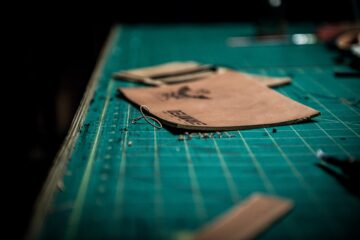
Does Your Leather Goods Manufacturer Have an In-House Sample Maker?
Before full production begins, you’ll want to see a prototype: a physical sample that reflects your exact design specs, materials, and construction details. This step is non-negotiable for any serious leather goods project.
The key question is whether the sample maker is in-house or outsourced. When a manufacturer handles sampling internally, the same team, tools, and materials used in production create your sample. That continuity matters. The sample you approve is a reliable preview of what will ship.
When sampling is outsourced, you introduce a gap. A third-party sample maker may interpret your specs differently, use different tooling, or work with slightly different materials. What you approve might not reflect what the production floor actually delivers, and that discrepancy can be expensive to fix after a run has started.
A strong follow-up: ask to see samples that the manufacturer has produced for other clients. This tells you about their range, their attention to detail, and the level of finish quality they’re capable of. Some manufacturers also offer a formal Samples as a Service program, which gives you a structured, low-risk way to evaluate quality before committing to a full production run.
How Does Your Leather Goods Manufacturer Source Its Materials?
How a manufacturer sources its leather says a lot about the company: its size, its relationships, and ultimately the quality and cost of your finished product.
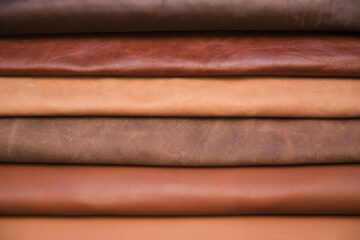
Leather goods manufacturers who source directly from tanneries and textile mills have negotiated relationships that typically yield better quality leather at lower cost. They have visibility into the tanning process, can request specific grades or finishes, and aren’t paying a middleman markup.
Leather goods manufacturers who buy through distributors aren’t necessarily a dealbreaker, but it’s worth understanding why. Smaller operations often rely on distributors because they don’t have the volume to go direct. That can mean less consistency in material quality, longer lead times if a distributor is out of stock, and higher material costs that get passed on to you.
Ask specifically: which tanneries or mills do you work with? A leather goods manufacturer with strong, established supplier relationships should be able to answer that confidently. Vague answers here are worth noting.
What Equipment Does the Leather Goods Manufacturer Operate In-House?
The equipment a manufacturer operates in-house directly determines what they can do, how consistently they can do it, and how quickly. More importantly, understanding their equipment tells you what processes might be subcontracted, and subcontracting introduces the same risks as outsourced sampling: inconsistency, delays, and reduced accountability.
For leather goods, key equipment to ask about includes:
- Die-cutting machines: used to cut leather pieces to precise, repeatable shapes. Critical for high-volume production and component consistency.
- Dieless cutting systems: a more flexible alternative that doesn’t require custom dies for every shape. Ideal for smaller runs or projects with complex or frequently changing patterns.
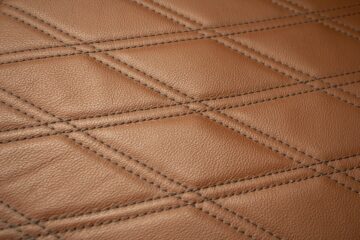
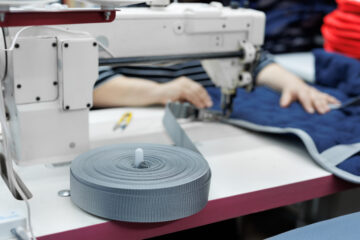
- Sewing and stitching equipment: ask about the types of machines and whether operators are trained on heavy-duty leather work specifically.
- Edge finishing tools: edge painting, burnishing, and finishing are where a lot of quality differentiation happens. Ask if this is done in-house.
- Embossing and debossing equipment: if branding or texture work is part of your design, confirm this is handled internally.
A vertically integrated manufacturer, one that handles most or all of these processes under one roof, gives you more control, fewer handoffs, and typically faster turnaround.
Are the Manufacturer’s Facilities Audited or Inspected?
Facility inspections aren’t just about cleanliness. They’re a proxy for operational discipline. A manufacturer that invites third-party audits and maintains a clean inspection record is one that holds itself accountable to a standard, not just to client expectations.
Ask how frequently their facility is audited and by whom. Some manufacturers pursue voluntary certifications or third-party quality audits; others operate in regulated industries (like government or military contracting) that require regular inspections. Either way, ask to see the most recent report.
What you’re looking for: evidence of consistency, safety compliance, and a culture of quality. A facility that scores well on inspections is far more likely to catch production issues before they become your problem.
If a manufacturer is reluctant to share audit results, that’s a signal worth taking seriously.
What Is the Leather Goods Manufacturer Doing to Minimize Environmental Impact?
Leather production has a well-documented environmental footprint, from the water and chemicals used in tanning to waste generated during cutting and finishing. According to the Leather Working Group’s 2024 Life Cycle Assessment, producing just 1 m² of finished leather generates 22.48 kg of CO₂ equivalent in greenhouse gas impact. Brands that care about sustainability (and increasingly, the buyers and retailers they sell to) need to ask this question directly.
Look for manufacturers who:
- Source from tanneries certified by the Leather Working Group, an organization that audits leather manufacturers on environmental performance
- Use leather remnants and offcuts in production rather than discarding them as waste
- Have water treatment or chemical management processes in place
- Can speak to their waste reduction efforts with specifics, not just talking points
Sustainability credentials are becoming a competitive differentiator for brands. A manufacturing partner who takes this seriously makes it easier for you to tell that story to your customers.
What Leather Cutting Methods Does the Manufacturer Use?
The way leather is cut directly affects precision, edge quality, and the long-term durability of your product. This is one of the most technically important questions you can ask, and the answers vary more than most buyers expect.
Hand cutting is skilled craft work, appropriate for bespoke or very small-run items, but difficult to scale with consistency.
Die cutting uses custom metal dies pressed into leather to cut precise shapes. It’s highly repeatable and ideal for high-volume production, but each unique shape requires its own die, adding upfront tooling cost.
Laser cutting is fast and precise, but it burns the edges of the leather. That burnt smell is permanent and embeds into the material. Laser-cut edges also can’t be edge-painted effectively, which limits your finishing options and affects the look and feel of the final product.
Dieless cutting (also called digital cutting) combines the flexibility of laser cutting with the clean edge quality of die cutting, without requiring custom dies or burning the leather. It’s particularly well-suited for complex shapes, smaller runs, and projects where edge finishing quality matters.
Ask your manufacturer what cutting method they use and why. A manufacturer who can explain the tradeoffs and match the method to your specific product is one who actually understands leather goods production.
How Does the Leather Goods Manufacturer Handle Quality Control?
Quality control isn’t a single checkpoint at the end of a run. It’s a process that should be built into every stage of production. Ask any leather goods manufacturer you’re considering to walk you through their QC process specifically.
Strong answers will include:
- Material inspection on arrival: checking hides or materials for defects before they enter production
- In-process checks at key production stages (cutting, stitching, finishing)
- Final inspection before goods are packaged and shipped, with documented pass/fail criteria
- How defects are handled: what happens if a piece doesn’t meet spec? Is it reworked, scrapped, or flagged for client review?
Also ask: what is their defect rate, and how do they track it? Manufacturers who measure quality take it seriously. Those who can’t answer this question clearly may not have a consistent process at all.
What Are the Manufacturer’s Minimum Order Quantities?
MOQs (minimum order quantities) vary widely across manufacturers, and they have a major impact on your economics, especially early in a product’s life.
Some manufacturers require high minimums because their production setup (custom tooling, die costs, setup time) only makes financial sense at volume. Others, particularly those with dieless cutting or more flexible workflows, can accommodate smaller runs.
Ask:
- What is the MOQ for an initial run?
- How do pricing and lead times change as volume increases?
- Is there flexibility for test runs or pilot orders before committing to full production?
A manufacturer who can work with you at different stages of your brand’s growth, starting small and scaling up, is a more valuable long-term partner than one who only makes sense once you’ve already proven demand.
Does the Leather Goods Manufacturer Offer Domestic and Overseas Production?
The decision to manufacture domestically or overseas involves tradeoffs in cost, lead time, quality control, and brand positioning, and the right answer depends on your specific product and business goals.
Manufacturers who operate facilities in both locations give you flexibility. Domestic production typically means shorter lead times, easier communication, and the ability to position your product as American-made. Overseas production can offer lower per-unit costs at higher volumes.
Ask manufacturers:
- Where are your facilities located?
- Which production runs are better suited to each location?
- How do you manage quality consistency between facilities?
A manufacturer with both domestic and overseas capabilities can help you make the right call for each product or order, rather than defaulting to whichever option benefits them most.
How Does the Leather Goods Manufacturer Communicate During Production?
The relationship between a brand and its manufacturer doesn’t end at the purchase order. Production runs into questions, adjustments, and unexpected decisions, and how a manufacturer handles communication during that process makes a significant difference in outcomes.
Ask:
- Who is your point of contact during production, and how available are they?
- How do you communicate updates on production status and timelines?
- What happens if a problem is discovered mid-production? How are clients notified and involved in the resolution?
- Do you provide production photos or milestone updates?
A manufacturer who is proactive about communication, who surfaces issues early and keeps you informed, saves you from unpleasant surprises at delivery. This is a quality that’s hard to see on a spec sheet, but it’s one of the most important factors in a successful long-term partnership.
Finding the Right Leather Goods Manufacturer for Your Brand
The right leather goods manufacturer isn’t just a vendor. They’re a production partner who helps you bring better products to market faster and with fewer headaches. The questions above are your starting point for separating leather goods manufacturers who can talk the talk from those who can actually deliver.
At Softline Brand Partners, we’ve built our reputation on exactly that kind of partnership. We source leather directly from tanneries, handle sampling in-house, operate both domestic and overseas facilities, and use dieless cutting technology to deliver clean, precise cuts without the burnt edges or tooling overhead. We work with startups and Fortune 500 brands alike and are always happy to walk prospective partners through our process in detail.
Ready to talk through your leather goods project? Contact us today, and we’d love to learn more about what you’re building.