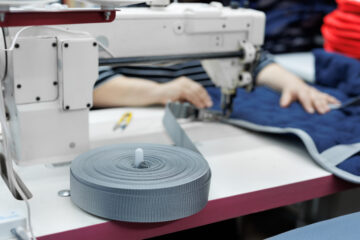
How Outsourcing Soft Goods Manufacturing Improves Efficiency
For brands that make products like bags, apparel, accessories, and other soft goods, manufacturing efficiency isn’t an abstract goal. Outsourcing to a specialized manufacturer is one of the most effective ways to build efficiency into your process from the start, and it’s worth being specific about what that actually means and why it works.
What “Efficiency” Really Means in Soft Goods Manufacturing
Efficiency in manufacturing gets thrown around loosely. In practice, for soft goods brands, it comes down to a few concrete things:
- Faster time-to-production: moving from approved sample to finished goods without bottlenecks, which is critical in contract manufacturing where timelines are tight
- Tighter cost control: eliminating waste in materials, labor, and rework through experienced production outsourcing
- Reliable consistency: producing at quality spec across every unit in your soft goods production run, not just the sample
- Scalability without chaos: being able to increase volume without rebuilding your entire process from scratch
An in-house or piecemeal manufacturing setup often struggles on all four fronts. A purpose-built outsourcing partner with end-to-end soft goods capabilities is structured to deliver on them.
How Outsourcing Builds Efficiency Into the Process
Specialized Expertise, Not a Learning Curve
When you work with a manufacturer that does soft goods exclusively, you’re not paying for their team to figure out your product category. They already know how different materials behave, how to engineer a clean seam, and how to set up a production line for your run size. That expertise compresses timelines and reduces costly errors early in production.
Softline Brand Partners brings vertically integrated capabilities to every project, from design through final shipment, which means fewer handoffs, fewer miscommunications, and fewer delays.
Streamlined Soft Goods Supply Chain
One of the most underappreciated efficiency gains from outsourcing soft goods manufacturing is supply chain consolidation. Managing your own material sourcing, vendor relationships, and logistics is a significant operational burden on its own. A full-service manufacturing partner handles bulk procurement, maintains established supplier relationships, and can often secure better material pricing than a brand sourcing independently. The result is a leaner, more predictable process with fewer points of failure.
Capital That Stays in the Business
Building or maintaining your own production capacity (equipment, facilities, skilled labor) ties up significant capital. Outsourcing converts that fixed cost into a variable one. You’re paying for production when you need it, not maintaining capacity when you don’t.
That freed-up capital can go toward product development, marketing, or simply building a healthier balance sheet.
Flexibility to Scale Your Soft Goods Production
Demand forecasting is difficult. Outsourcing gives brands the ability to scale production up or down without the lag of hiring, training, or purchasing equipment. Whether you’re testing a new product line or responding to a larger-than-expected order, an experienced manufacturing partner can adjust without the friction that comes with in-house production.
Risk Distribution in Soft Goods Production
Supply chain disruptions, material shortages, and labor market volatility are real challenges in manufacturing. A dedicated soft goods manufacturer with established supplier relationships and production redundancy is better positioned to absorb those shocks than a brand managing production on its own. Outsourcing doesn’t eliminate risk. However, it places that risk with a partner that has the infrastructure and experience to manage it effectively.
Quality That Holds at Scale
Efficiency means nothing if quality breaks down when volume increases. The right soft goods manufacturing partner has quality control processes built into production, not treated as an afterthought. Consistent materials, trained operators, and documented specs mean the 10,000th unit looks like the first. For brands scaling into larger production outsourcing runs, that consistency is what protects your reputation with customers and retail partners alike.
Choosing the Right Soft Goods Manufacturing Partner
Not all outsourcing relationships produce these results. The partner matters enormously. Look for:
- Soft goods specialization: deep experience with your material types, construction methods, and product categories, not a generalist shop trying to adapt
- End-to-end capabilities: fewer handoffs between design, production, decoration, and fulfillment means fewer opportunities for things to go wrong
- Transparent communication: clear timelines, honest capacity assessments, and proactive updates throughout the production process
- Domestic and overseas options: the flexibility to produce in the right location for your timeline, cost requirements, and quality standards
Softline Brand Partners has been a trusted soft goods manufacturing partner for brands ranging from startups to Fortune 500 companies, with domestic manufacturing and overseas manufacturing capabilities and a full suite of services from design through shipment.
The Efficiency You Build In Is the Efficiency You Keep
The most efficient soft goods manufacturing process is one that’s built right from the beginning, with the right partner, the right capabilities, and the right infrastructure. Outsourcing isn’t a shortcut. It’s a structural decision that compounds over time, paying off in tighter timelines, more consistent quality, and a production process that scales with your brand rather than against it. Contact Softline Brand Partners to talk through your project. See what a more efficient manufacturing process could look like for your brand.