Refining Your Idea Before Talking with a Sample Maker
For first-time founders in the soft goods space, creating a product can feel like a chicken-and-egg problem: you need a prototype to pitch your brand, but you also need a clear concept to create that prototype. Working with a sample maker is an exciting milestone, but walking in unprepared can lead to costly revisions, delays, and wasted materials. Whether you’re developing a leather wallet, a modular tote, or a performance sling bag, strong planning upfront leads to smoother sampling and a better final product. Here’s how to refine your idea and prepare like a pro.
Step One: Understand the Market You’re Entering
Market research isn’t just for big brands with focus groups and data science teams. For startups, it’s one of the most powerful ways to validate your concept and differentiate from what’s already out there. The goal is to give yourself a strong foundation before diving into the industry. You want to know enough to make wise decisions, avoid major pitfalls, and communicate with confidence.
Start with these guiding questions:
- Who is this product for, and what problem does it solve?
- What else is on the market serving the same purpose?
- What price points are consumers already paying?
- What materials or features are common among top-selling competitors?
Use free tools like Google Trends to identify interest over time. Explore marketplaces like Etsy, Amazon, or Huckberry to review popular products. Read customer reviews, especially the 3-star ones, for clues about unmet expectations. Run a short survey on Instagram or LinkedIn to hear directly from your audience.
Step Two: Translate Research Into a Clear Product Concept
Once you’ve mapped out your competitive landscape, turn your attention inward. What exactly are you trying to create?
Your product concept should answer three questions:
- What is it? (e.g., a refillable travel pouch for skincare)
- Who is it for? (e.g., Gen Z consumers who prioritize sustainability and portability)
- Why does it matter? (e.g., most options are bulky, leaky, or wasteful)
From there, sketch out rough features (what is essential and what is optional?) Think in terms of materials, closures, compartments, textures, or modularity. You don’t need to be a designer, but having a one-pager that summarizes your product’s core idea, inspiration, and use case will make everything easier going forward. Use Softline Brand Partner’s Product Concept Worksheet to get all your ideas lined out on paper.
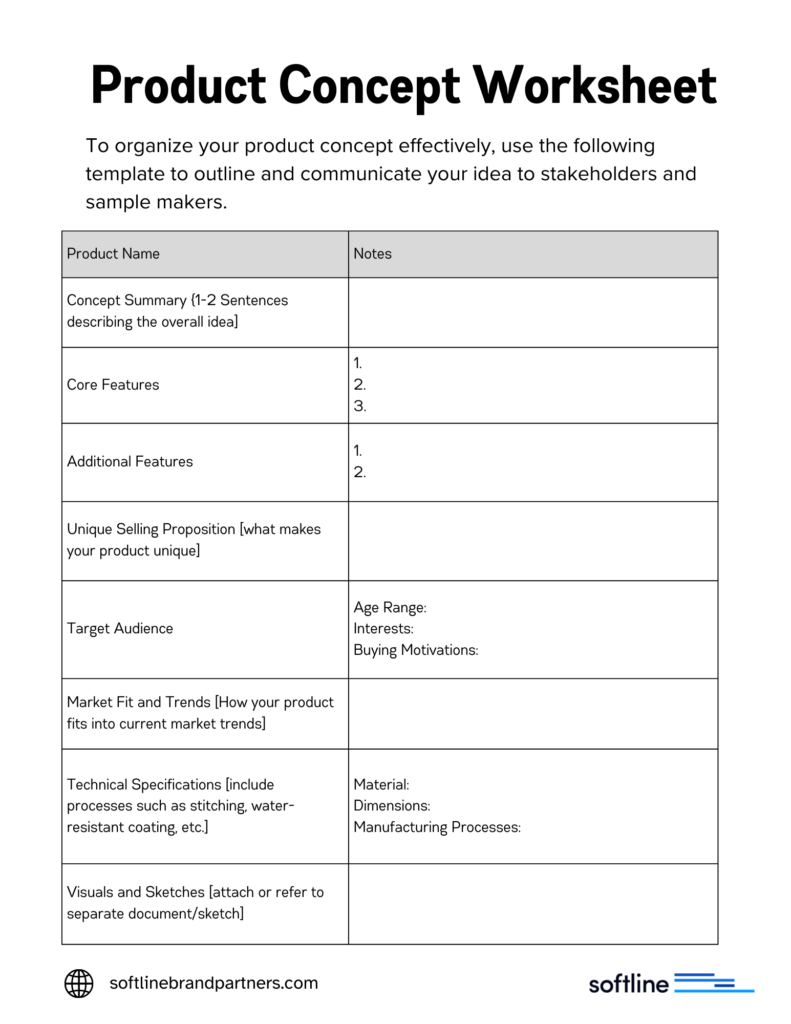
Download the Product Concept Worksheet
Step Three: Clarify What Makes Your Product Unique
When you approach a sample maker, they’ll want to know: what makes this product worth producing?
Startups often don’t realize how saturated the soft goods space can be. Differentiation is essential for successful positioning in the soft goods workspace. Your product might stand out through:
- Materials (e.g., cactus leather instead of traditional cowhide)
- Function (e.g., a belt that doubles as a storage strap)
- Sustainability (e.g., modular repair kits that extend product life)
- Aesthetic (e.g., gender-neutral, muted tones for all-season wear)
- Story (e.g., inspired by a heritage design with modern upgrades)
Softline can help you articulate this USP more clearly in your brief. But the clearer you are from the beginning, the better your production partner can guide design and costing decisions that support your brand’s identity.
Step Four: Create a Design Brief
Before your first meeting with a sample maker, pull together a design brief, even if it’s informal. Think of it as your working pitch deck for the product. It doesn’t need to be perfect or polished, but it should contain the core information required to kick off development:
- Product description: What it is, what it does, who it’s for
- Core features: List 3–5 essential elements
- Materials (if known): What kind of leather, fabric, or hardware are you imagining?
- Use case: Is it for travel? Daily carry? Gifting?
- Sketches or references: Even if hand-drawn, visuals go a long way
- Your goals: When are you hoping to launch? What are your cost constraints?
If you’re working with Softline Brand Partners, our team can help build on what you have, turning napkin sketches into production-ready design documents. Showing initiative in this early phase saves time and ensures mutual alignment.
Step Five: Prepare for the Tech Pack (Even If You’re Not There Yet)
You won’t need a full tech pack for your first sample, but understanding what it includes helps you start gathering the right information. A tech pack is your product’s blueprint. It will eventually include flat sketches with measurements, materials lists, assembly notes, packaging, and labeling requirements.
Think of it as the handoff tool between design and manufacturing. If you’re missing information, that’s normal, especially for startups. Softline will help you build this out as your prototype evolves.
Step Six: Plan to Collaborate, Not Just Handoff
A sample maker helps you bring your vision to life. Be ready to listen, ask questions, and revise. Softline’s team works with startups every day to navigate this process. We offer design support, sourcing expertise, and an understanding of what early-stage brands need: flexibility, responsiveness, and honest feedback.
Why This Preparation Matters
You might be tempted to skip all of this and just ask a factory to “make a bag.” But when you enter sampling without a clear idea, it’s like asking a chef to cook without a recipe. You’ll waste time, overspend, and end up with a product that doesn’t reflect your brand.
The good news? Preparation doesn’t have to be overwhelming. A few focused hours spent organizing your concept, clarifying your differentiators, and summarizing your vision will pay off tenfold when it’s time to prototype.
Ready to Go From Idea to Sample?
Softline Brand Partners specializes in helping early-stage brands turn raw ideas into refined soft goods. Whether you’re creating your first wallet line or exploring a multifunctional accessory collection, we guide you through design, development, and production with startup-friendly expertise. Let’s turn your idea into something tangible. Contact Softline Brand Partners today!