Die Cutting and Dieless Cutting in Soft Goods Manufacturing: When to Use Each
In soft goods manufacturing, the cutting process directly affects material utilization, production efficiency, and finished product quality. Two of the most common cutting methods are traditional die cutting and dieless cutting. Each offers distinct advantages depending on the product, production volume, and stage of development. Understanding when each method makes sense can help you make better manufacturing decisions and avoid unnecessary production costs.
What Is Die Cutting and Where Is It Used?
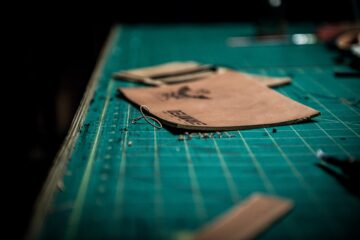
Die cutting is a manufacturing process that uses a custom-made steel die to cut repeated shapes from sheet materials. The die functions much like a cookie cutter. Once it has been manufactured, it can repeatedly cut identical parts with a high level of consistency.
In soft goods manufacturing, die cutting is commonly used to produce:
- Leather panels
- Wallet components
- Bag panels
- Foam inserts
- Reinforcement pieces
- Fabric components
- Gaskets and industrial soft goods
Because every part is produced from the same die, manufacturers can achieve highly repeatable results across large production runs. For products with stable designs and predictable production volumes, die cutting often becomes an efficient manufacturing solution.
Traditional Die Cutting: How It Works
Traditional die cutting begins with the creation of a custom steel rule die that matches the exact shape of the component being produced. After the die is built, it is mounted into a cutting press where pressure forces the die through the material. This process allows manufacturers to produce identical components repeatedly with minimal variation.
Advantages of Die Cutting
For many production programs, traditional die cutting offers several advantages:
- Consistent part dimensions
- Efficient production of repeated components
- Reduced variation between production runs
- Strong material utilization for established products
- Repeatable quality over large volumes
These benefits make die cutting particularly well-suited for mature products with stable specifications. Products that are manufactured regularly over long production cycles often justify the upfront investment required to create custom tooling.
What Is Dieless Cutting?
Dieless cutting uses computer-controlled cutting equipment instead of physical dies. Rather than relying on custom tooling, digital cutting systems follow programmed cutting paths to produce each component. This approach eliminates the need to manufacture a steel die before production begins.
As a result, dieless cutting provides significantly more flexibility during development and smaller production runs. Manufacturers can quickly modify digital cutting files without rebuilding physical tooling. This makes dieless cutting especially valuable when designs continue to evolve.
When Dieless Cutting Makes Sense
Dieless cutting is often selected during product development because it allows manufacturers to make design revisions quickly. Instead of producing new tooling after every revision, digital files can simply be updated.
This makes the process well-suited for:
- Prototype development
- Sampling
- Product testing
- Short production runs
- Design revisions
- Limited-edition products
For brands launching new products, this flexibility can simplify development while reducing the time required to move through multiple prototype iterations. As designs become finalized and production volumes increase, manufacturers may later transition to traditional die cutting if it better supports long-term production goals.
Cost and Volume Tradeoffs Between the Two Methods
Neither cutting method is universally better. The right choice depends on the balance between flexibility, tooling investment, production volume, and product maturity.
Traditional die cutting typically requires an upfront investment to create tooling. Once that tooling exists, it can efficiently produce large quantities of identical components. Dieless cutting removes the need for dedicated tooling, making it attractive for products that are still changing or have relatively low production volumes.
Some projects may begin with dieless cutting during development before transitioning to die cutting once the design has stabilized. Others may remain in dieless production indefinitely because production quantities never justify dedicated tooling.
Rather than viewing these methods as competitors, experienced manufacturers often treat them as complementary tools within the same production strategy.
How Cutting Methods Affect Material Efficiency
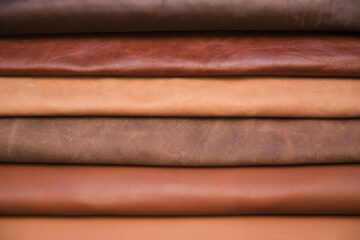
Cutting accuracy influences more than production speed. It also affects how efficiently raw materials are used. Thoughtful part layout and nesting strategies help manufacturers maximize usable material while minimizing scrap. This becomes especially important when working with premium materials such as leather or specialty technical fabrics.
Manufacturers also evaluate grain direction, stretch characteristics, natural hide variation, and defect placement when determining cutting layouts. These decisions can have a meaningful impact on both product quality and material utilization.
Should You Outsource Die Cutting?
Some companies consider outsourcing die cutting separately from the rest of the manufacturing process. While this approach may make sense in certain situations, many brands benefit from working with a manufacturer that manages cutting as part of a complete production program.
When cutting, sewing, quality control, and assembly are coordinated by the same manufacturing partner, communication is often simplified. The manufacturer can evaluate:
- Material selection
- Cutting strategy
- Assembly methods
- Quality requirements
- Production scheduling
This integrated approach helps ensure that cutting decisions support the overall manufacturing process rather than functioning as an isolated service.
How Contract Manufacturers Choose the Right Cutting Method
Experienced manufacturers rarely begin by asking whether die cutting or dieless cutting is better. Instead, they evaluate the project as a whole. Factors that influence the cutting strategy include:
- Production volume
- Product maturity
- Material type
- Component complexity
- Revision frequency
- Tooling investment
- Lead time objectives
A leather wallet entering full production may benefit from traditional die cutting. A newly designed backpack undergoing multiple prototype revisions may be a better candidate for dieless cutting. The right approach depends on where the product is in its development lifecycle.
Softline’s Approach to Cutting Components
At Softline Brand Partners, die cutting and dieless cutting are integrated into the broader manufacturing process rather than treated as standalone services. Our team evaluates each project individually, selecting the cutting method that best aligns with the product, materials, production volume, and development stage. Our experience in custom bag manufacturing and leather goods manufacturing allows us to coordinate cutting, sourcing, assembly, and quality control through a single manufacturing partner.
Start Your Soft Goods Manufacturing Project With Softline
Choosing the right cutting method is about more than selecting equipment. Production volume, material type, product maturity, and long-term manufacturing goals all influence whether die cutting or dieless cutting is the better fit.
Softline Brand Partners helps brands evaluate cutting strategies as part of a complete manufacturing program that includes sourcing, prototyping, cutting, assembly, and quality control. Contact our team to discuss your next soft goods manufacturing project.