What Does a Full-Service Soft Goods Manufacturer Do?
If you’re developing a soft goods product like a backpack, leather tote, or branded pouch, you’ve probably come across the term “full-service manufacturer.” It sounds comprehensive, and it is, but what does it actually involve? In short, a full-service soft goods manufacturer supports your product journey from concept to delivery. Rather than handing off each stage to separate vendors, a full-service partner handles product design, material sourcing, prototyping, manufacturing, packaging, and logistics in a coordinated workflow. This approach is especially valuable for startups and growing brands that want to minimize complexity, maintain quality, and move faster from idea to market.
What Is a Full-Service Soft Goods Manufacturer?
A full-service manufacturer acts as a strategic partner, managing every stage of product development and production under one umbrella. This eliminates the need to coordinate across separate designers, sourcing agents, factories, and logistics teams. It also reduces handoffs, delays, and miscommunications. For brands without in-house product development teams or those launching new products, this model simplifies operations and ensures consistency from start to finish.
The benefit is not just convenience. It’s about brand alignment, quality control, and speed. When one team owns the whole process, your product is more likely to launch on time, align with your original vision, and meet your customers’ expectations.
Core Services Offered by Full-Service Manufacturers
Core services include the following.
Product Ideation and Design Refinement
Great products often begin with a rough sketch or mood board. A full-service partner helps evolve those early ideas into something that can be manufactured at scale. This includes:
- Translating inspiration into functional design concepts
- Advising on how to balance form, function, and cost
- Recommending design features that align with specific use cases (e.g., retail, gifting, travel, or DTC)
- Prototyping early concepts to test construction or usability
Many of Softline’s clients bring us their first-ever product idea. Others are looking to refresh a legacy design with updated details or new materials. In both cases, we guide the process from vision to manufacturability.
Tech Pack Creation and Prototyping
Once the design is defined, a tech pack is created. This document outlines every component of the product in detail. It is essential for consistent, repeatable production.
Tech packs include:
- Product dimensions and construction details
- Bill of materials (BOM) with fabric, hardware, and trim callouts
- Stitching types and finishing instructions
- Artwork or placement for logos, labels, and tags
- Packaging, folding, and shipping instructions
From there, the sampling process begins. Full-service teams manage rounds of prototyping, review results, and incorporate feedback until the design is ready for production. This iterative process helps brands refine functionality, test durability, and confirm brand alignment—before investing in large quantities.
Material and Component Sourcing
Sourcing is often underestimated. Materials must look good, be durable, be available in volume, be within budget, and be consistent across batches. Full-service manufacturers bring sourcing expertise and long-standing supplier relationships to the table.
This includes:
- Identifying suitable materials for the intended use and feel
- Securing sustainable or certified options when needed
- Coordinating swatch approvals and lab testing
- Managing substitute options in case of shortages or price fluctuations
- Sourcing packaging components like branded polybags, hangtags, or inserts
Having sourcing fully integrated with design and production eliminates guesswork and delays. It also helps avoid late-stage surprises, like a perfect material that turns out to be out of stock, out of spec, or out of budget.
Manufacturing and Assembly
This is where your design becomes a reality. Once samples are approved and materials are secured, the production line gets to work.
Full-service manufacturers handle:
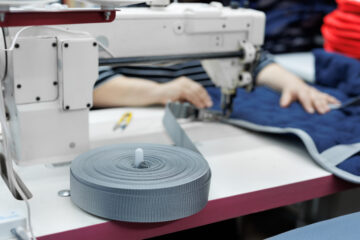
- Pattern cutting, stitching, and assembly
- Material allocation and batching
- Labeling and finishing
- Batch management and production quality control
What makes this different from a basic cut-and-sew shop is the connection to the development process. Full-service teams use your tech pack and approved samples as the benchmark for production. Some full-service manufacturers offer both domestic and offshore production options to support different pricing strategies, lead times, and compliance needs.
Quality Control and Assurance
Quality is not a final step. It is woven throughout the process. Full-service manufacturers integrate quality checks at every milestone.
This includes:
- Pre-production material and trim checks
- In-line inspections during production
- Final inspections before shipment
- Optional third-party testing or documentation
- Ongoing feedback loops for continuous improvement
Packaging, Labeling, and Retail Readiness
Once your product is made, how it’s packaged and presented matters just as much. Full-service support includes:
- Folding and packaging items to fit retail or warehouse guidelines
- Applying SKU labels, barcodes, and inventory identifiers
- Custom packaging inserts, boxes, tissue, and hangtags
- Ensuring products meet compliance standards (e.g., country of origin, fiber content)
- Coordinating kitting for bundles or gift sets
By handling these details in-house, full-service partners reduce the number of touchpoints and errors between production and delivery.
Logistics and Delivery Coordination
Production isn’t complete until the product is in the right place, on time, and in perfect condition. Full-service teams offer:
- Domestic and international shipping coordination
- Coordination with freight providers, 3PLs, and retailers
- Inventory holding or short-term storage
- Staggered or partial shipment release planning
- Support with customs, documentation, and routing
For brands working with large distributors, subscription models, or retail programs, this coordination ensures your launch goes smoothly and meets all compliance expectations.
Why a Full-Service Model Matters
When you manage development, sourcing, and production across separate vendors, you take on the job of being the go-between. That creates more friction, more potential for misalignment, and more time spent coordinating rather than building your business.
Working with a full-service manufacturer means:
- Faster turnaround from concept to market
- Consistent quality across every unit
- Fewer handoffs, which reduces the chance of error
- One point of contact for communication and accountability
- Flexibility to scale up or iterate quickly
Here’s how it compares:
| Advantage | Full-Service Manufacturer | Multiple Vendors |
| Project Oversight | Centralized | Fragmented |
| Timeline Coordination | Seamless | Disconnected |
| Product Consistency | High | Variable |
| Communication | One point of contact | Multiple handoffs |
| Quality Ownership | Built-in | Harder to manage |
| Scalability | Structured and supported | Requires reorganization |
Partner with Softline
Whether you’re launching your first product or expanding your brand’s reach, Softline Brand Partners offers full-service support designed to simplify production and protect your vision. Our approach helps you move confidently from idea to finished product, without the stress of managing multiple vendors or processes on your own.
We partner with brands at every stage of development: from product concept and tech pack creation to final fulfillment. If you’re looking for an experienced manufacturing team to bring your soft goods to market with clarity, quality, and speed, we’re here to help. Start your project with Softline Brand Partners.